Canoeing
Glide Through The Tetons
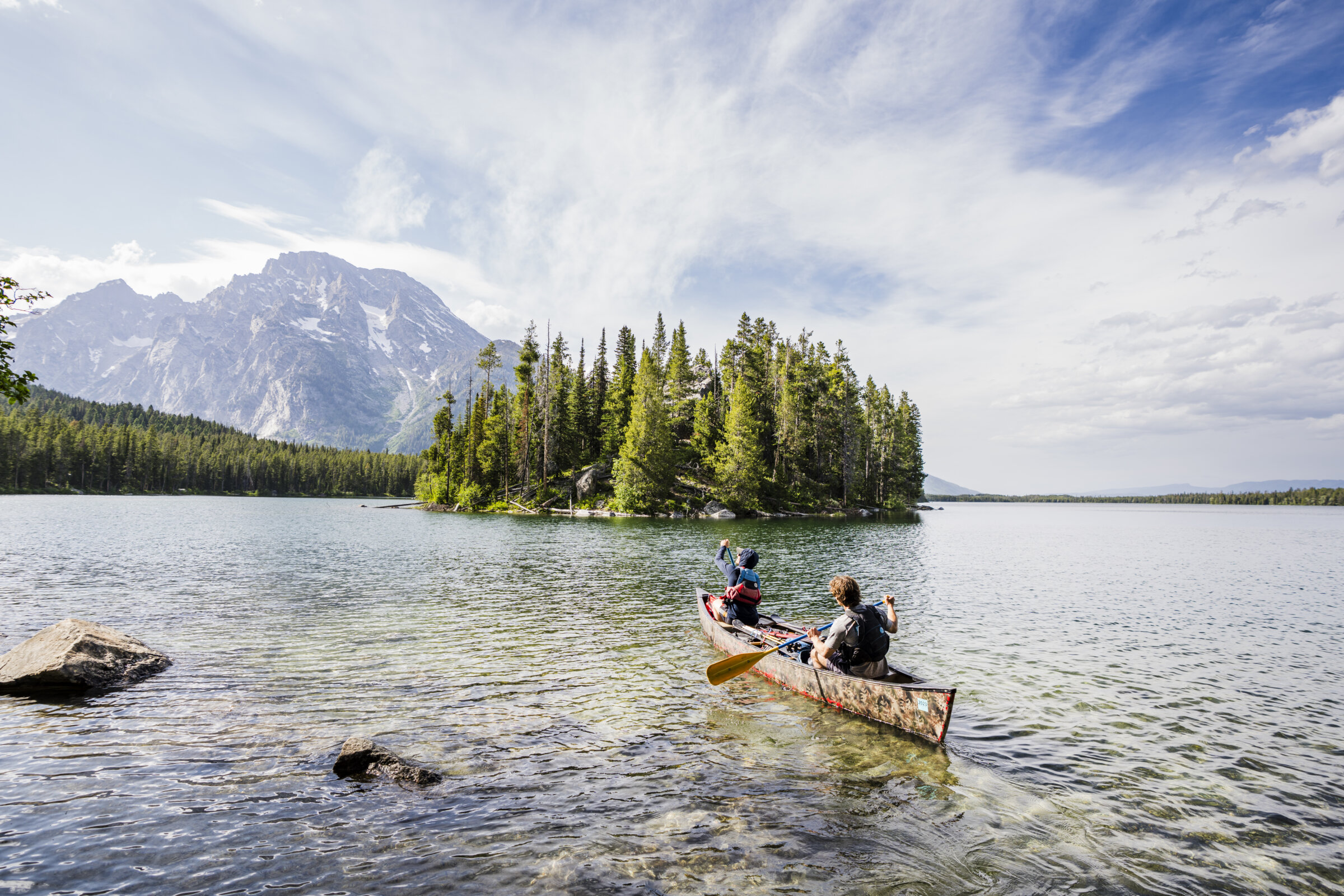
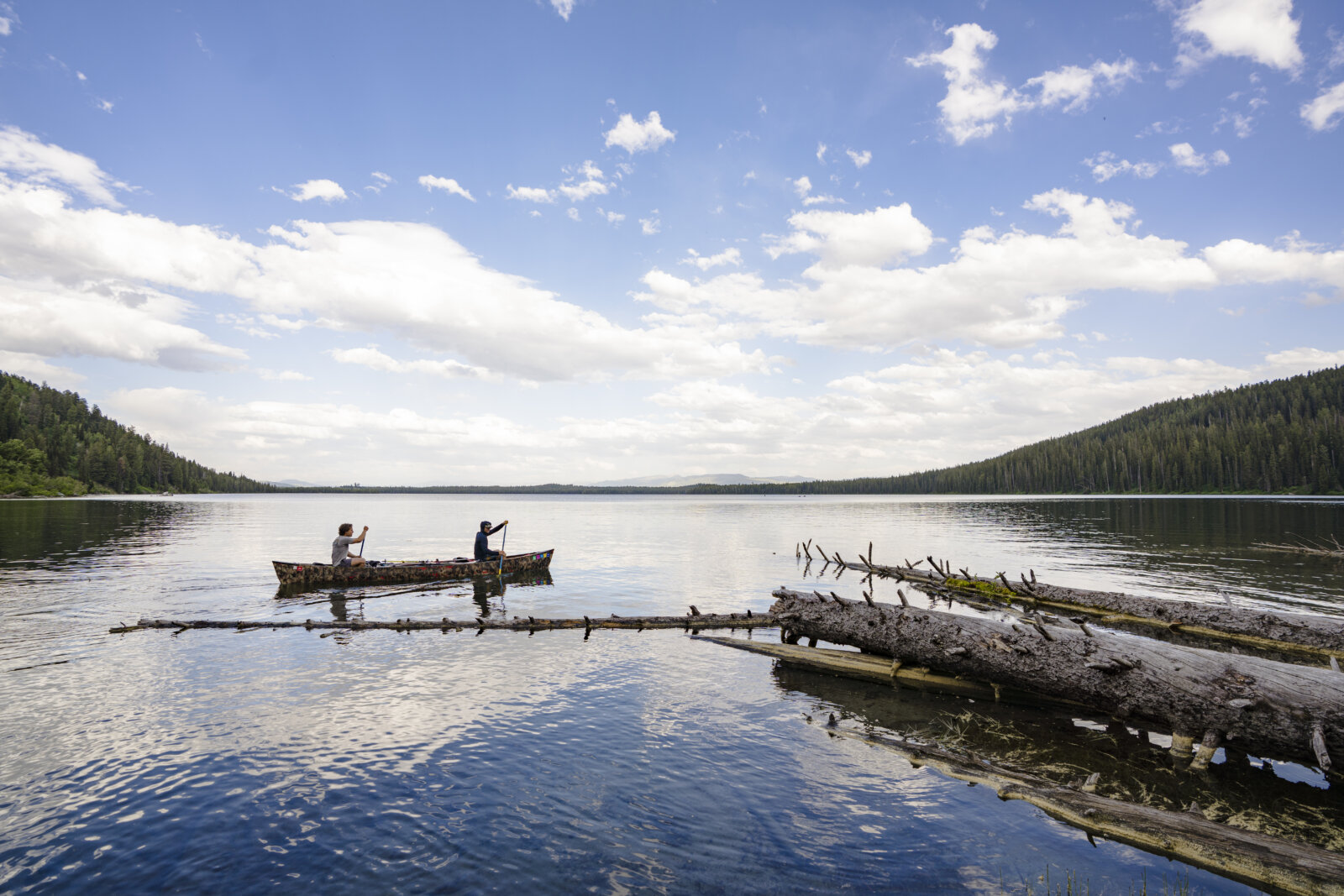
Canoeing in Jackson Hole means slowing down enough to notice things. The way light filters through morning mist on a valley lake, how quietly a moose can move through marsh grass, the sound a paddle makes when it's just you and the water. Whether you're exploring calm alpine lakes with the family or navigating the Snake River's gentle stretches, a canoe gives you the space and stability to truly take in the landscape around you.
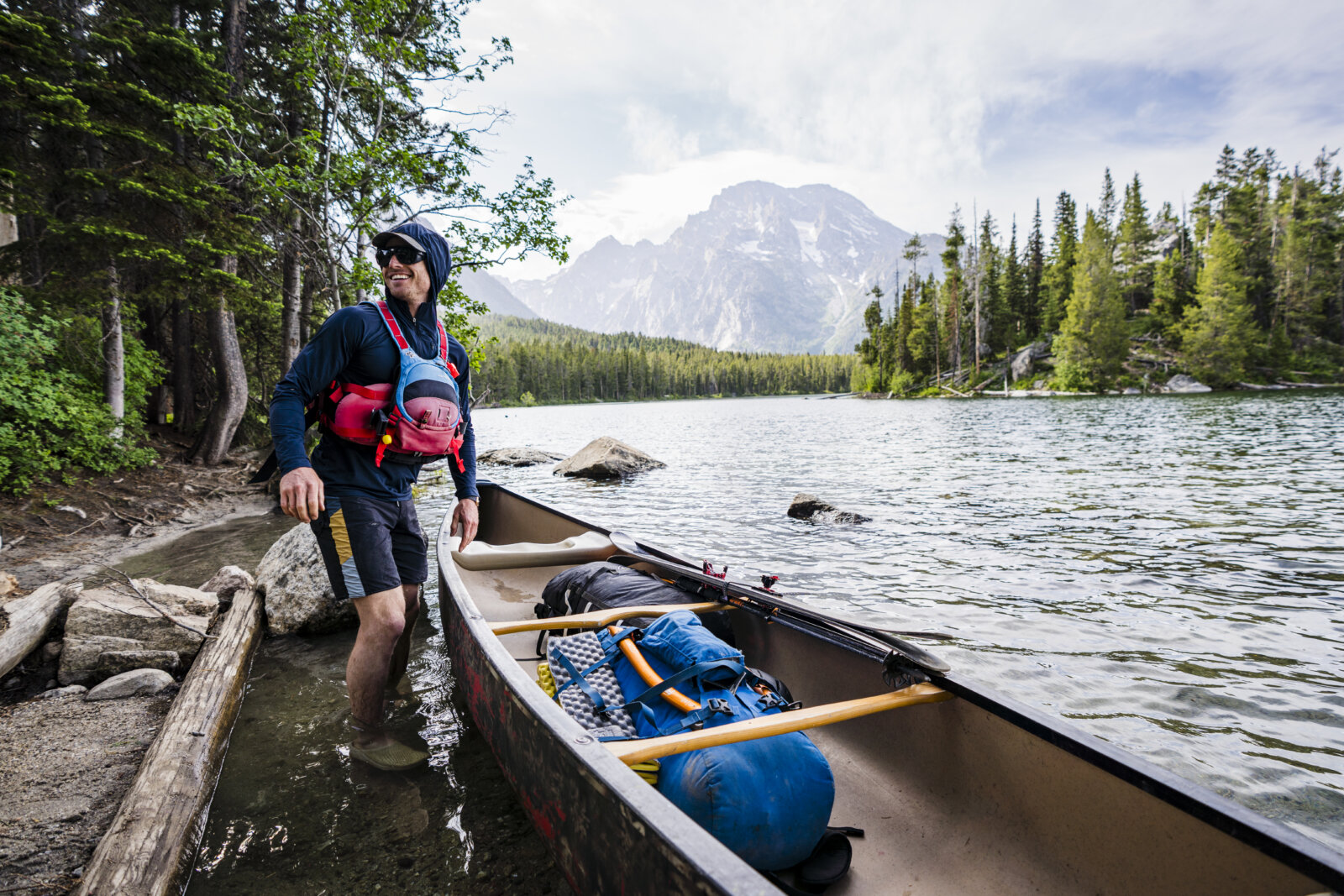
The valley's lakes are ideal for canoeing. GTNP and BTNF offer protected waters where you can paddle for hours surrounded by the Tetons without fighting current or waves. Load up a canoe with camping gear for an overnight trip to Leigh Lake's backcountry campsites, or pack a picnic and spend the afternoon exploring hidden coves. The Snake River's calmer sections work well for canoes too, especially for families looking for a mellow float with plenty of wildlife spotting opportunities.
You'll share the water with the same animals that call this ecosystem home like great blue herons fishing in shallows, beavers working on their lodges, ospreys diving for trout. A canoe's quiet approach means you often get closer to wildlife than you would on foot.
How to have a great experience on the water in Jackson Hole
Follow Rules & Regulations
Familiarize yourself with the rules and regulations of the lake or river you’re headed to. Lakes and river sections fall under the jurisdiction of Yellowstone or Grand Teton National Parks or the Bridger-Teton National Forest; each has different requirements.
Wear a Life Jacket
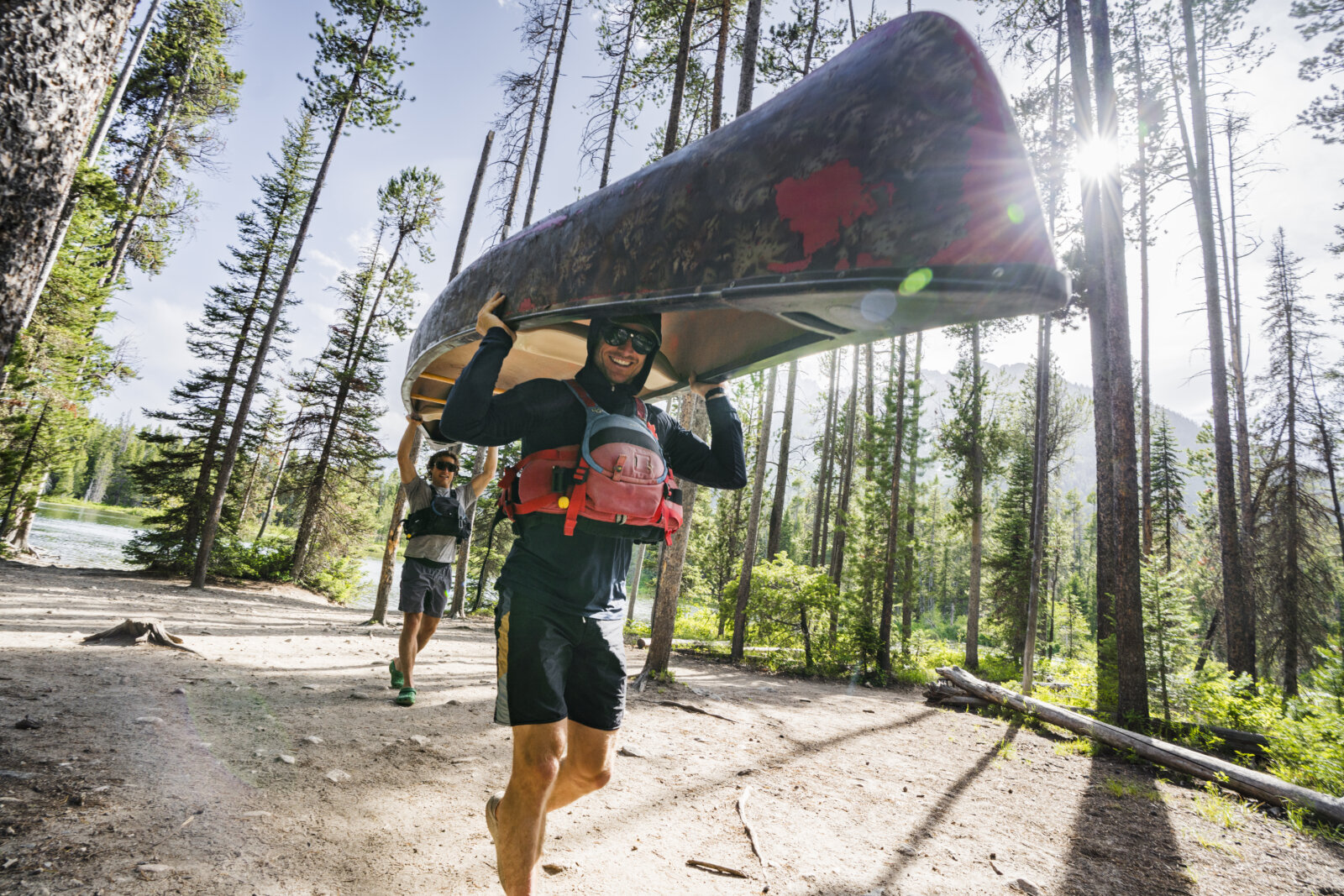
Wear a PFD and be appropriately attired for the water. Pack water, sunscreen, snacks, and an extra layer of clothing and make sure everything on your boat or SUP board is lashed down. Properly securing your belongings ensures you don’t inadvertently leave litter in your wake and that you also don’t lose your favorite cooler.
Know Before You Go
Be sure to check maps, current water levels, river conditions, and weather. An afternoon thunderstorm, drop in temperature, or rise in wind can make being on the water significantly more dangerous. On lakes especially, stay close to the shore to avoid getting caught in a wind event.
Local Rentals and Retailers
Edit FiltersLive by the wild rules
Adventure starts here.
Keep Exploring